

– Commercial –
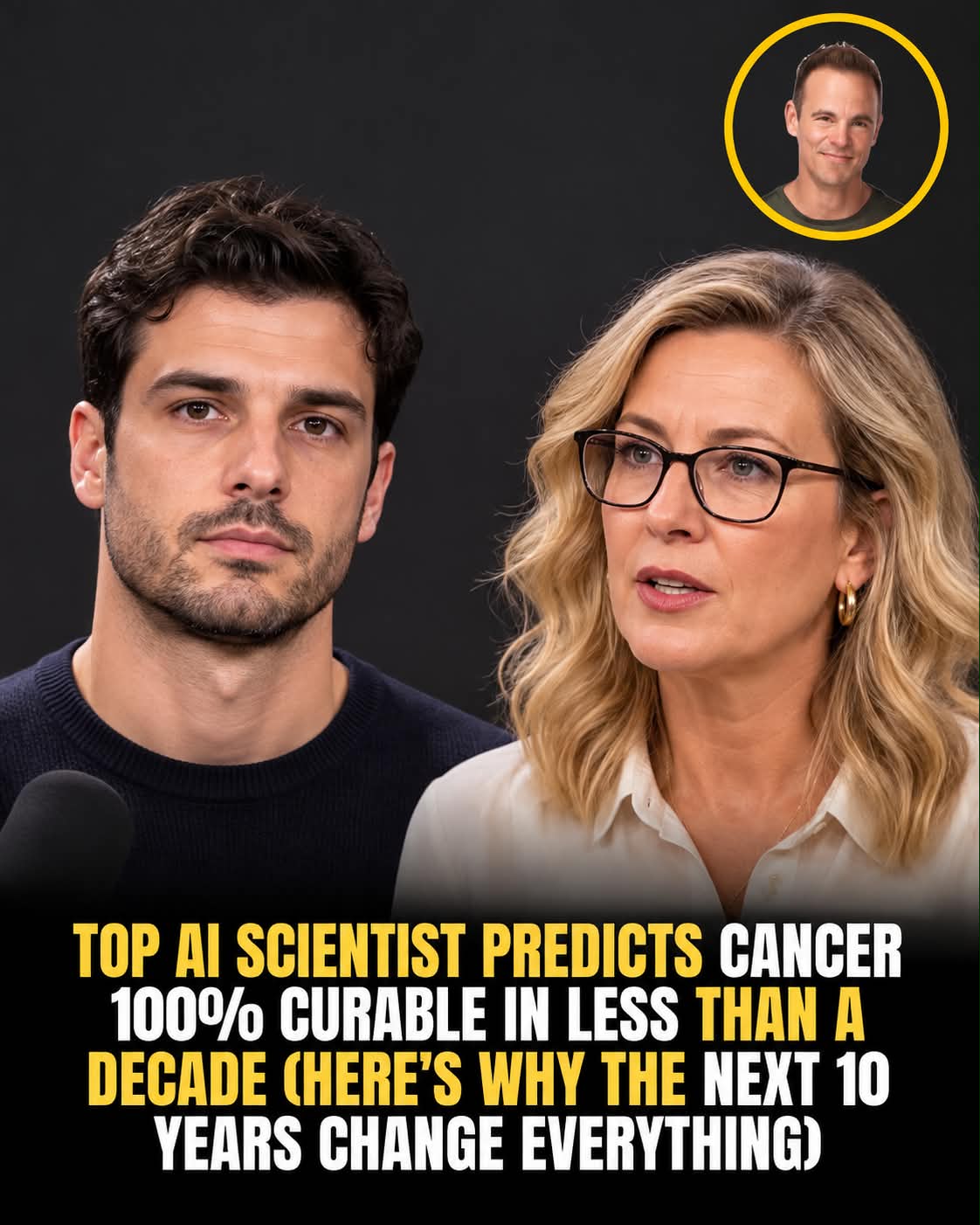
Immunologist Derya Unutmaz has a survival tip for the approaching decade, and he means it, actually. “So strive to not die for the subsequent 10 years,” he instructed podcaster Rhonda Patrick this yr, in response to a transcript on Podcast Rex.
Unutmaz, a professor on the Jackson Laboratory who has examined OpenAI’s reasoning fashions, argues that AI will make most cancers totally curable in below a decade and push humanity previous “longevity escape velocity” in eight to 10 years. That’s the level the place every year of medical progress provides greater than a yr to your life expectancy.
The claims have unfold broadly, most lately in a viral weblog write-up. However the particulars maintain up inconsistently. A number of the proof he cites is stable, some is stretched, and lots of most cancers researchers assume the timelines will not be lifelike.
The newest spherical comes from episode #113 of Rhonda Patrick’s long-form science podcast, FoundMyFitness. In it, Unutmaz argues that progress is exponential whereas human instinct is linear. “You may consider the subsequent 10 years as bringing extra progress than the final century,” he stated, in response to the episode’s printed transcript.
His personal phrases on most cancers are extra cautious than the headlines. In a FoundMyFitness section on immunotherapy, he instructed Patrick that most cancers “might be 100 completely different illnesses with a whole bunch of subtypes.” He famous that some childhood leukemias now have treatment charges close to 90 p.c or larger.

These will not be new predictions. As SPZH reported, he instructed Spanish-language AI popularizer Jon Hernández in August 2025 that individuals who survive the subsequent 15 years might acquire one other 50, “as a result of we’re going to remedy growing older.” In an episode of the Levity podcast, he sided with Google DeepMind’s Demis Hassabis and stated growing older itself could be solved inside 20 years.
Unutmaz’s favourite proof level is an actual story, however it’s typically instructed unsuitable. As Pakistan’s Daybreak reported, drawing on The Australian, Sydney tech entrepreneur Paul Conyngham’s rescue canine Rosie was recognized in 2024 with mast cell most cancers, not melanoma as some write-ups say.
Fortune reported that after chemotherapy and surgical procedure failed, Conyngham used ChatGPT to plan an strategy and AlphaFold to select protein targets. UNSW researchers sequenced the tumor, and Pall Thordarson’s RNA Institute made a bespoke mRNA vaccine in below two months. Rosie acquired her first dose in December 2025, and most of her tumors shrank.
“That is the primary time anybody’s ever performed this remedy,” Martin Smith, director of UNSW’s Ramaciotti Centre for Genomics, instructed The Australian, in remarks quoted by Daybreak.
Thordarson himself has cautioned that Rosie will not be cured, as a result of some tumors didn’t reply, Fortune famous. It’s one canine, not a medical trial, and consultants quoted by Enterprise Customary stress that such remedies want cautious validation.
Unutmaz additionally factors to an AI that forecasts illness earlier than it strikes. That’s the Delphi-2M mannequin, which, as Scientific American reported, was printed in Nature in September 2025. In keeping with UK Biobank, whose data educated it, the mannequin estimates the danger of greater than 1,000 illnesses as much as 20 years forward. Munich pc scientist Stefan Feuerriegel instructed Scientific American its multi-disease attain was “astonishing.”
The mannequin provides possibilities, although, not certainties. Its builders instructed the Catalan newspaper Ara that it isn’t but prepared for medical use. They hope docs can use it inside 5 to 10 years, The Impartial reported.
– Commercial –
His determine of 12 million US misdiagnoses a yr, which he cited from reminiscence, checks out. In keeping with the US AHRQ Affected person Security Community, it comes from a 2014 examine by patient-safety researcher Hardeep Singh in BMJ High quality & Security. “It represents about 5 p.c of the outpatient encounters,” medical correspondent Jon LaPook defined on CBS Information. The quantity covers outpatient care solely and was extrapolated from three chart-review research.
Unutmaz is a part of a wider wave of optimism. Hassabis has stated ending all illness could also be doable, telling interviewers, “Perhaps inside the subsequent decade or so, I don’t see why not.” Anthropic’s Dario Amodei has made related predictions about most cancers.

Most cancers researchers have pushed again onerous. In reporting by The Info, summarized by AI Weekly, scientists together with self-described AI fanatics stated the biology doesn’t help these timelines. Researchers who spoke to Inc. made Unutmaz’s personal level towards him: curing each most cancers would imply “discovering hundreds of distinct remedies.”
On the Affiliation of Well being Care Journalists’ fall summit, drug-development consultants stated AI hastens computational duties however is way from a magic repair, AHCJ reported. Doctor-scientist Eric Topol, a outstanding AI-in-medicine advocate, has referred to as current treatment timelines unrealistic.
Unutmaz actually did say what he’s quoted as saying, and many of the analysis he cites is actual. However the canine vaccine is a single case, the disease-prediction mannequin forecasts threat quite than diagnoses, and his timelines are a minority view amongst most cancers researchers. Even he hedges: within the episode he admits he is likely to be unsuitable, then provides that he’s fairly certain he’s proper.
AI is already dashing up elements of biology. Whether or not that provides as much as a treatment for most cancers by the mid-2030s remains to be a wager, not a discovering.
Please SHARE this text with your loved ones and pals on Fb.
Animalsmeal
– Commercial –
Love and Peace
– Commercial –